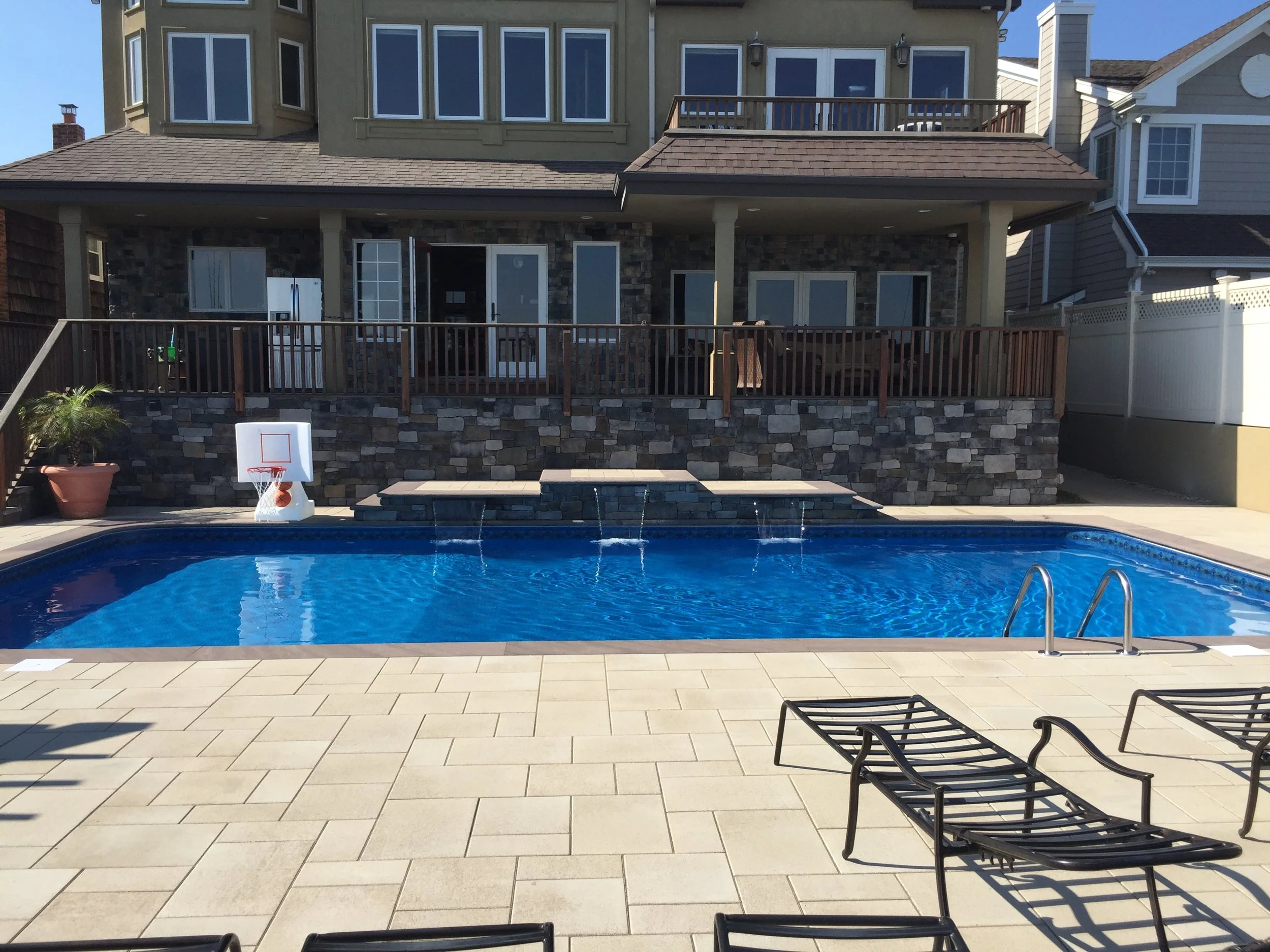
For discerning homeowners investing in luxury outdoor living, professional masonry in Long Island, NY, is a legacy. Along the Gold Coast, throughout the Hamptons, and across Nassau and Suffolk counties, masonry defines the estates that turn heads and hold their presence for decades. From expansive patios and custom driveways to refined retaining walls and outdoor kitchens, masonry sets the tone for how your home feels, functions, and endures.
Related: Masonry in Melville and Northport, NY: 5 Timeless Design Ideas That Define Outdoor Living
What Is Considered Masonry Work?
Masonry work encompasses the construction of structures using individual units—typically stone, brick, or concrete—bound together with mortar or installed as interlocking systems. In high-end residential environments across Long Island, masonry is rarely a minor detail. It is often the architectural backbone of the property, shaping how the estate looks, feels, and functions from the moment you arrive.
At Gary Duff, our masonry services include:
Custom patios
Walkways and pathways
Driveways
Retaining walls
Stoops and entry features
Outdoor kitchens
Pool patios and surrounding hardscape areas
Each of these elements plays a distinct role in the overall experience of your home. A driveway is not just a place to park—it establishes arrival. A front stoop sets the tone before anyone steps inside. A patio becomes an outdoor living room. Retaining walls quietly solve elevation challenges while sculpting the landscape into usable, elegant tiers.
In many of Long Island’s premier neighborhoods—whether along the North Shore, throughout the Hamptons, or in established Nassau County estates—masonry is what gives a property its visual authority. Clean lines, balanced proportions, carefully selected materials, and seamless transitions between spaces are what separate standard construction from refined outdoor design.
In coastal communities like Port Washington or Lloyd Harbor, masonry must account for salt exposure, higher moisture levels, and sandy soil conditions. Inland areas of Suffolk County often contend with clay pockets and pronounced freeze-thaw cycles. These environmental factors influence everything from excavation depth to base preparation and drainage systems. Masonry must be engineered below the surface just as carefully as it is designed above it.
When we build a patio, we are not simply laying pavers. We are:
Excavating to appropriate frost-depth standards
Installing compacted aggregate bases in controlled layers
Incorporating edge restraints for structural integrity
Managing drainage to prevent standing water or erosion
Ensuring smooth transitions between structures and the surrounding landscape
The visible surface may be stone or paver, but the true strength of masonry lies beneath it. That hidden structural work determines whether your investment remains level and pristine—or shifts and settles over time.
True masonry is not surface-level decoration. It is foundational craftsmanship designed to perform beautifully for decades.
How Long Does Masonry Last?
One of the primary reasons masonry remains the gold standard for high-end homes is its lifespan. When thoughtfully designed and professionally installed, masonry can last 30, 40, or even 50 years or more. In many cases, it outlasts the trends that inspired it.
On Long Island, durability is directly tied to climate awareness. Our region experiences:
Freezing winters with repeated freeze-thaw cycles
Hot, humid summers
Coastal salt air in many shoreline communities
Heavy rain events and seasonal nor’easters
These environmental conditions are not gentle. Water seeps into joints, temperatures fluctuate rapidly, and soil expands and contracts. Inferior installations often reveal their weaknesses within just a few seasons—cracking, shifting, or developing uneven surfaces.
Properly constructed masonry anticipates these stresses from day one.
At Gary Duff, we build for longevity by focusing on structural integrity at every stage:
Proper excavation depth to mitigate frost heave
Compacted aggregate bases that resist settling
Drainage systems behind retaining walls to relieve hydrostatic pressure
Edge restraints to prevent lateral movement
Precise grading to move water away from structures
Longevity is not accidental. It is engineered.
For example, a driveway in Old Westbury must withstand not only vehicle weight but also winter freeze cycles that can push improperly installed surfaces upward. A patio in the Hamptons must endure salt-laden air and seasonal moisture without premature deterioration. These are not cosmetic considerations—they are structural ones.
Because of these careful preparations, our patios, walkways, driveways, and walls are built to maintain their stability and appearance year after year. Masonry that is properly installed does not feel temporary. It feels solid. Substantial. Permanent.
Masonry isn’t just long-lasting. It becomes part of the property’s legacy.
What Is the Most Widely Used Masonry Material for Construction Works?
Across Long Island, concrete pavers remain one of the most widely used masonry materials for residential construction—and for good reason. Their combination of structural performance and design versatility makes them particularly well-suited to our climate.
High-quality concrete pavers offer:
Exceptional compressive strength
Consistent sizing for precise installation
A wide range of colors, textures, and finishes
Interlocking systems that allow flexibility during freeze-thaw cycles
For driveways especially, interlocking pavers provide the structural integrity necessary to handle vehicle loads without cracking like traditional poured concrete slabs. Because they are individual units rather than one continuous surface, they distribute weight more evenly and adapt better to subtle ground movement.
For patios and walkways, pavers deliver crisp edges, defined borders, and tailored laying patterns that elevate the overall aesthetic. Whether the architectural style is classic colonial, coastal shingle, or modern estate, pavers can be selected to complement and enhance the home’s character.
Natural stone is also highly desirable in luxury properties throughout Long Island. It introduces variation in tone and texture that feels organic and refined. Stone surfaces bring a sense of permanence and sophistication, especially in expansive patio settings or around pool areas.
When selecting materials, we carefully evaluate:
The architectural style of the home
Exposure to salt air or high moisture
Intended function (entertaining, poolside, driveway traffic)
Drainage requirements and existing grade conditions
A waterfront property may require material considerations different from a wooded estate in Brookville. Soil composition, surrounding landscape, and usage patterns all inform the recommendation.
There is no universal solution. While concrete pavers may be widely used, the right material is the one that aligns with your property’s needs and aesthetic goals. That decision is never made casually. It is guided by experience, environmental knowledge, and structural understanding.
In high-end masonry, materials absolutely matter—but installation expertise matters even more.
Related: 10 Features Outdoor Fireplace & Masonry Experts Include in Commack, NY Backyards
What Temperature Is Too Cold for Masonry?
In Long Island, winter weather plays a significant role in masonry scheduling. Temperatures below 40°F begin to introduce challenges for certain aspects of masonry construction, particularly mortar-based applications.
When temperatures drop below freezing:
Mortar may not cure properly
Moisture within materials can freeze and expand
Structural bonds may weaken
Surface integrity can be compromised
Freeze-thaw cycles are especially critical during installation. If mortar cures too slowly or freezes before properly setting, it can affect long-term stability.
For that reason, most masonry installations are scheduled during warmer months—typically from April through November, weather permitting. This window provides consistent temperatures that allow proper curing, compaction, and stabilization of base materials.
However, planning often begins much earlier.
Many homeowners in Nassau and Suffolk counties initiate consultations in late winter. Early planning ensures:
Access to preferred materials and finishes
Coordinated scheduling with other landscape elements
Completion before peak summer entertaining season
Timing is strategic. On Long Island, spring and early summer installations are particularly desirable, allowing patios, outdoor kitchens, and pool areas to be fully functional for the warmest months of the year.
Professional masonry is as much about understanding seasonal rhythms as it is about laying stone. Climate awareness protects the structural integrity of your project and ensures that construction conditions support long-term performance.
What Is the Best Type of Masonry?
The best type of masonry is never a generic answer. It depends entirely on the application, structural demands, and architectural vision of your property.
For driveways, interlocking concrete pavers often provide an ideal balance of strength and design flexibility. They are engineered to handle vehicle loads and adapt to minor ground movement without fracturing.
For patios and outdoor living areas, both pavers and natural stone can create expansive, refined surfaces designed for entertaining. The choice often depends on desired texture, color variation, and overall design intent.
For retaining walls, engineered block systems are frequently used to provide structural stability on properties with elevation changes—something not uncommon in various parts of Long Island. These systems are designed to support soil loads while integrating visually with surrounding masonry features.
The “best” masonry solution is the one that:
Aligns with your home’s architectural style
Performs reliably in Long Island’s climate
Serves its functional purpose with structural integrity
Enhances the overall flow of your outdoor space
A waterfront estate in the Hamptons may require enhanced drainage considerations and materials suited to coastal exposure. A property in Old Westbury with mature trees and varied topography may require retaining walls and terraced patios that address grade changes thoughtfully.
There is no one-size-fits-all solution. There is only what is right for your specific property.
Determining that requires professional evaluation, site analysis, and a clear understanding of both aesthetics and engineering principles.
Why Might Masonry Construction Have Lower Maintenance Costs?
For high-end homeowners, long-term performance matters. One of the most compelling advantages of professionally installed masonry is its relatively low maintenance profile over time.
Compared to other outdoor surface materials, masonry typically requires:
No seasonal staining or refinishing
No sanding or structural resurfacing
No vulnerability to rot or insect damage
Minimal long-term structural repairs when properly installed
Interlocking paver systems also offer a practical advantage: selective repair capability. If a section of a patio or driveway requires adjustment due to unforeseen ground movement, individual units can be lifted and reset without replacing the entire surface. This targeted flexibility is particularly beneficial in Long Island’s freeze-thaw climate.
Solid poured surfaces, by contrast, are more prone to cracking under stress. Once cracked, repairs are often more visible and more invasive. Interlocking systems absorb movement more effectively, preserving surface continuity.
Retaining walls, when built with proper drainage systems behind them, remain stable and structurally sound for decades. Without drainage planning, hydrostatic pressure can build and cause failure. With professional installation, water is directed away, preserving integrity.
Lower maintenance costs are not about cutting corners. They are the result of:
Thoughtful engineering
Proper base preparation
Professional-grade materials
Skilled, detail-oriented installation
When built correctly, masonry simply performs. It holds its structure. It retains its alignment. It continues to support the way you live and entertain without demanding constant upkeep.
Masonry as the Backbone of Outdoor Living
For many of our Long Island clients, masonry is the starting point of their outdoor transformation. It creates the stage for everything else.
A custom patio becomes the setting for summer dinners.
A grand driveway establishes arrival.
A retaining wall reshapes a sloped property into usable entertaining space.
An outdoor kitchen becomes the center of weekend gatherings.
These are not small upgrades. They are lifestyle investments.
Outdoor kitchens, in particular, are increasingly popular across Nassau and Suffolk counties. Masonry provides the structural base for built-in appliances, countertops, and cooking stations. Proper foundation work ensures these features remain level and secure despite seasonal temperature shifts.
Pool patios demand slip-resistant surfaces, proper grading for drainage, and careful integration with surrounding landscape elements. Masonry makes this possible while maintaining a polished aesthetic.
Every element must work together. Masonry is the framework that ties it all into a cohesive environment.
Designed for Long Island’s Climate
Long Island presents specific environmental conditions that require technical expertise:
Sandy soil in many coastal regions
Expansive clay pockets inland
High groundwater tables in certain communities
Salt exposure near shorelines
Each of these factors influences excavation depth, base material selection, and drainage planning.
For example:
Driveways require deeper excavation and thicker aggregate bases to support vehicle loads.
Retaining walls require engineered backfill and drainage systems to relieve water pressure.
Pool patios must slope correctly to prevent standing water during heavy summer storms.
Ignoring these realities leads to shifting pavers, leaning walls, and surface instability.
Addressing them leads to enduring performance.
That’s where professional masonry proves its value. It is built not just for beauty, but for the realities of the region.
Elevated Design Meets Structural Precision
Affluent homeowners are not looking for generic layouts. They are looking for tailored environments.
Pattern selection, border detailing, elevation changes, and integrated steps all contribute to the final composition. Masonry offers design flexibility that complements both traditional estates and contemporary residences.
We consider:
Symmetry with architectural lines
Scale relative to the home
Transition points between spaces
Integration with plantings and lighting
Masonry should feel intentional—not added on.
A well-designed walkway draws guests forward. A patio should feel expansive without overwhelming the yard. A retaining wall should blend seamlessly into the surrounding grade.
These nuances define luxury.
Related: Top Masonry and Outdoor Lighting Designs for Homes in Sands Point, NY & Fort Salonga, NY